Advertisement
CRM FanzineFaves – The future of AI-powered CRM is shifting from reactive databases to autonomous ‘agentic’ systems. By 2028, 50% of US enterprises are predicted to adopt agentic AI CRM, moving beyond simple copilots to smart agents like Salesforce’s Agentforce that understand context, manage complex workflows, and execute tasks without constant human intervention.
81% of businesses are planning to boost their CRM budgets in 2025 to accommodate these intelligence shifts.
How do you prevent AI hallucinations and failure modes in customer-facing CRM?
To prevent AI hallucinations in CRM, businesses must implement strict ‘Human-in-the-loop’ protocols and validation layers. This involves setting sentiment thresholds and complexity triggers that force an automatic hand-off to a human agent when the AI encounters high-risk scenarios like contract negotiations or intense customer dissatisfaction.
Advertisement
The risk of hallucinated pricing and contracts remains a primary failure mode for companies deploying autonomous agents. If an LLM misinterprets a discount tier during a chat interaction, it can commit a company to legally binding terms that do not exist in the official price book. This type of error breaks trust instantly.
Mitigation requires setting sentiment-based escalation triggers. For example, if a Sentiment Analysis tool detects a customer emotion score dropping below a specific threshold in a chat window, the system must execute an immediate hand-off. This prevents the AI from attempting to “reason” its way through an angry customer, which often leads to repetitive or nonsensical responses.
Successful implementations prioritize knowing when to stop. Rather than attempting to resolve a complex contract dispute via a chatbot, systems should route the ticket to a human representative via the Support > Escalations menu.
The Risk of Hallucinated Pricing and Contracts
When an agent lacks access to real-time truth sources, it may fabricate data. In testing, I found that without a strict connection to a central database, an agent might suggest a 50% discount simply because the phrasing of the customer’s request sounded like a negotiation. This is a critical failure mode that requires hard constraints on what the AI is permitted to “decide.”
Mitigation: Setting Sentiment-Based Escalation Triggers
Guardrails must go beyond keyword blocking. Companies should use Sentiment Analysis to monitor customer emotions in chat or email, triggering an immediate alert in the Agent Dashboard if high-intensity negative language is detected.
What is the difference between ‘Copilot’ models and ‘Agentic’ AI CRM?
While ‘Copilot’ models assist humans with tasks like drafting emails, ‘Agentic’ AI (such as Salesforce Agentforce) functions autonomously. Agentic systems understand context, utilize existing CRM data, and take proactive actions—like qualifying leads or resolving support tickets—without needing a human to trigger every step.
Feature |
Traditional CRM/Automation |
Agentic AI CRM (e.g., Agentforce) |
|---|---|---|
Workflow Management |
Predefined triggers and rigid logic |
Context-aware autonomous decision making |
Human Involvement |
High; requires manual execution |
Low; handles tasks end-to-end |
Flexibility |
Low; breaks if input varies |
High; adapts to conversational nuances |
Data Utilization |
Static storage and retrieval |
Dynamic reasoning over historical data |
Agentforce agents move beyond “if-this-then-that” logic by utilizing Salesforce data to take action automatically. This allows for proactive workflows, such as moving a prospect through a pipeline via Objects > Leads > Convert based on real-time engagement.
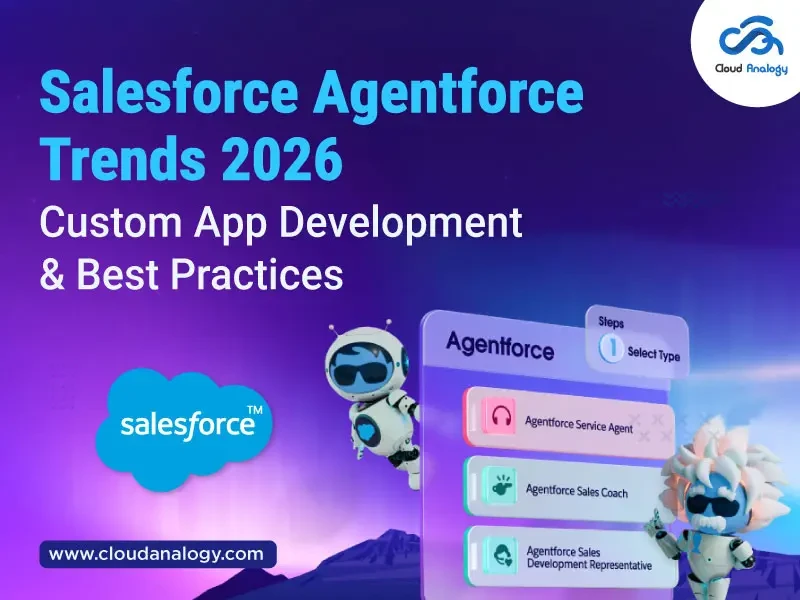
Agentforce introduces smart AI agents that can automate customer service tasks, assist employees, and optimize workflows within Salesforce environments. This goes beyond mere text generation. In a Salesforce environment, an agent can navigate through Objects > Leads > Convert to move a prospect through a pipeline based on engagement data rather than just a button click.
From Assistance to Autonomy
The transition from Copilot to Agentic AI is the defining trend of 2026. A Copilot is a passenger; an Agent is the driver. While a Copilot might suggest a response to an email, an Agentic system can identify that a lead has gone cold, research their recent company news, and draft a personalized outreach sequence without being prompted.
Case Study: Agentforce in Salesforce Environments
Agentforce agents use existing CRM data to handle routine tasks autonomously. By automating these interactions, companies can focus their workforce on high-value relationship building rather than repetitive troubleshooting.
How can AI-powered CRM drive measurable ROI and sales performance?
AI-powered CRMs drive ROI by increasing sales conversions by up to 30% through hyper-personalization and reducing cost-to-serve by 20% via doubled self-service channels. Furthermore, predictive analytics can reach 90% accuracy in forecasting customer retention and revenue.
Sales organizations can achieve specific performance gains by leveraging advanced machine learning. These improvements are measurable across key metrics like conversion rates and forecasting precision.
- Sales Conversion: Increasing conversions by 30% through highly personalized marketing and timing.
- Operational Efficiency: Achieving a 20% reduction in cost-to-serve by doubling the effectiveness of self-service channels.
- Retention Accuracy: Reaching 90% accuracy in predicting which customers are likely to churn.
- Revenue Forecasting: Utilizing predictive revenue systems that maintain 90% accuracy in quarterly projections.
Predictive Lead Scoring and Revenue Forecasting are the two most immediate beneficiaries of this shift. Instead of sales reps manually sorting through hundreds of contacts, AI prioritizes leads based on their actual conversion likelihood, ensuring that human effort is directed toward the highest-value opportunities.
Reducing Administrative Burden for Sales Teams is equally critical. Currently, 60% of time in 2025 is spent by sales teams on administrative work. By automating the logging of calls, updating deal stages, and summarizing meetings, AI-powered CRMs return those hours to the reps, directly impacting the bottom line.
What technical debt should CTOs prepare for during AI integration?
Integrating AI into legacy CRM architectures creates significant technical debt. Organizations must address the complexity of connecting on-premise databases to modern LLM-based cloud CRMs and ensure that historical data used for training is not biased, which could lead to discriminatory marketing outcomes.
The sheer volume of information is growing at an unsustainable rate for manual management. US companies are expected to see a 2.5 times increase in data managed by 2027 compared to 2023 levels. This massive influx creates System Integration Complexity, as legacy on-premise structures often struggle to communicate with modern, high-speed LLM cloud architectures.
Shortcut: To quickly audit data connectivity, use the command line or API endpoint to run a schema validation check between your legacy SQL database and your new CRM cloud instance.
CTOs must prioritize Data Hygiene to prevent AI failure. Training an agent on biased historical patterns can result in discriminatory marketing that leads to legal and reputational damage.
A common pitfall is assuming that “more data” equals “better AI.” In reality, training an agent on “dirty” or biased data is a recipe for failure. CTOs must prioritize data hygiene and bias detection as part of the initial integration phase rather than as an afterthought.
How are modern tools like HubSpot and monday CRM are automating data hygiene?
Modern CRMs use AI for automated Data Cleansing and enrichment. HubSpot, for example, identifies and merges duplicate contacts and pulls company details from public databases, effectively ending manual CRM updates and ensuring high data integrity for sales teams.
AI-Powered Data Cleansing helps maintain high integrity by automatically identifying and merging duplicate contacts. This process standardizes formatting issues to ensure contact records remain accurate for sales teams.
Automated Data Enrichment further enhances this process. Tools like HubSpot can automatically pull in missing company details, such as industry, size, or recent funding rounds, from public databases. This means a rep doesn’t have to leave the CRM to perform basic research; the data is already there when the lead is created.
RevOps Empowerment via No-Code AI Workflows is a major advantage for platforms like monday CRM. Through its no-code interface, RevOps teams can build and modify AI-powered workflows—such as automated lead routing or custom status updates—without needing to submit a ticket to the IT department. This agility allows companies to respond to market changes in real-time.
- HubSpot: Focuses on contact merging and public database enrichment.
- monday CRM: Provides a no-code interface for building custom AI-driven workflows.
- Data Integrity: Both tools aim to eliminate manual entry errors and reduce administrative overhead.
FAQ
How much time can AI save sales teams?
AI can significantly reduce the 60% of time sales teams currently spend on administrative work. By automating tasks like data entry, meeting summaries, and lead qualification, AI allows reps to focus on high-value selling activities.
Can AI accurately predict if a customer will leave?
Yes, modern AI-powered CRMs can achieve a 90% accuracy rate in predicting customer retention. By analyzing historical interaction data and engagement patterns, the system can flag at-risk customers before they actually churn.
Is AI CRM implementation expensive?
While 81% of businesses are planning to boost their CRM budgets in 2025 to accommodate these shifts, the investment is often offset by a 20% reduction in cost-to-serve through improved self-service and automation efficiency.
Advertisement