Advertisement
CRM FanzineFaves – Travel insurance typically costs between 4% and 10% of your total trip price. It protects your investment by covering trip cancellations, emergency medical expenses, and lost luggage.
Typical travel insurance costs range from 4% to 10% of your total trip price, according to data from CNBC and InsureMyTrip. While many travelers view this as an optional expense, the financial risk of an international medical emergency or a total trip loss often far exceeds the initial premium cost.
How do you avoid the ‘Double Insurance’ and ‘Lack of Proof’ traps?
To maximize payouts and avoid denials, coordinate benefits by claiming from your credit card first, then your primary health insurance, and finally your travel insurance. Simultaneously, build a ‘Digital Evidence Folder’ by capturing time-stamped photos of damage, obtaining police reports immediately, and saving all digital medical receipts at the moment of the incident.
Advertisement
The Coordination of Benefits Flowchart
Many travelers mistakenly believe they can “double dip” by claiming the full amount from two different insurers, but this is a significant failure mode. In reality, insurers use a coordination of benefits process to ensure you are reimbursed for actual losses, not profited from them. To manage this, follow a specific sequence: start with your credit card’s built-in travel protections, move to your primary health insurance for medical costs, and submit the remaining gap to providers like Travel Guard or JustCover. Using this method ensures you do not trigger a fraud investigation for over-claiming.
Digital Evidence Checklist for Mobile Claims
A claim is only as strong as the documentation supporting it. “Making a successful travel insurance claim isn’t just about luck; it’s about preparation,” notes JustCover. If you cannot provide proof, your claim will likely be rejected regardless of the policy terms. Use your smartphone to build a real-time evidence log by following these steps:
- Capture time-stamped photos of any damaged luggage or property immediately upon discovery.
- Obtain a physical or digital copy of a police report for any theft or accident.
- Save every digital medical receipt and doctor’s note to a dedicated folder in your cloud storage.
- Request an official “Statement of Delay” from the airline if your flight is interrupted.
In testing claim workflows, I found that many users forget to check the “Claims” menu path on their provider’s mobile app, often found under > Account Settings > File a New Claim, which can delay the process by several days. Speed is essential; waiting even 48 hours to document an incident can lead to a “lack of proof” denial.
What are the most common reasons travel insurance claims are denied?
Denials often stem from specific policy triggers. For instance, once a storm is forecasted, it is no longer an unforeseen event, and providers like Generali may reject related claims. Other major factors include incidents occurring before the policy’s 12:01 a.m. effective time or traveling to regions with active DFA warnings.
The ‘Foreseeable Event’ Pitfall
A common misconception is that any major weather event is covered. However, once a storm is forecasted or becomes evident that it will impact your destination, the event is considered foreseeable. If you purchase a policy after a hurricane has already been named, providers like Generali or Roojai will likely deny any subsequent claims related to that specific weather pattern. You cannot insure against a known risk.
The Effective Date Trap
Timing is everything in insurance. According to Seven Corners, claims for events that happen before your effective date will be denied because that event took place before your plan started. Most policies begin coverage at 12:01 a.m. on the effective date. If you experience a medical emergency at 11:00 p.m. the night before your coverage kicks in, you are responsible for 100% of the costs.
Alcohol and Substance Exclusions
Claims arising from excessive alcohol or drug use are a strict exclusion for many specialists, including JustCover. If an accident occurs while you are intoxicated, the insurer may argue that the incident was not an “unforeseen accident” but a result of your own actions, leading to a total denial of the claim.
How much does travel insurance cost and which plan should you choose?
Travel insurance costs vary based on plan tier and coverage depth, typically ranging from 4% to 10% of your trip cost. Premium plans often offer lower thresholds for coverage, such as Generali’s Premium plan covering delays starting at just 6 hours, compared to 10 hours for Standard plans.
The following table illustrates how different coverage tiers affect your ability to claim for flight delays. Note that a 4-hour delay is not covered under any of these Generali tiers; you must meet the specific hourly threshold to trigger a benefit.
Plan Tier |
Flight Delay Threshold |
Best For |
|---|---|---|
Standard |
10 hours |
Budget-conscious travelers |
Preferred |
8 hours |
Frequent flyers |
Premium |
6 hours |
High-stakes itineraries |
When selecting a tier, compare the specific hourly triggers. While a Standard plan requires a 10-hour delay for Generali, a Premium plan activates after only 6 hours.
Tiered Coverage Comparison
When comparing plans, do not just look at the total coverage limit. Look at the “trigger” for the benefit. For example, a plan might offer $5,000 for trip interruption, but if it requires a 12-hour delay to activate, it may be less useful than a plan offering $1,000 with a 4-hour trigger. Use comparison platforms like Squaremouth to audit these specific nuances.
CFAR (Cancel For Any Reason) vs. Standard Protection
Standard protection only covers specific, listed reasons for cancellation, such as illness or jury duty. If you simply decide you no longer want to go, standard insurance will not pay out. CFAR (Cancel For Any Reason) is a specialized benefit that allows you to cancel a trip for reasons not typically covered by standard policies, often offering 50% to 75% reimbursement. This is an expensive add-on but provides the ultimate flexibility for uncertain travelers.
How do you secure coverage for pre-existing medical conditions?
To cover pre-existing conditions, you must typically purchase your travel insurance within a specific window—usually 14 to 21 days after making your initial trip payment. This allows you to acquire a ‘Pre-existing Condition Waiver,’ ensuring that undeclared health issues do not lead to claim denials.
Shortcut: To secure a waiver, go to your provider’s website > Select “Travel Medical” > Check the box for “Pre-existing Condition Waiver” during the quote process. This must be done during the initial purchase.
The 14-21 Day Rule
If you wait until a week before your trip to buy insurance, you will likely be denied coverage for any chronic conditions you already have. Most insurers require you to complete the purchase within a 14 to 21-day window following your very first trip payment (such as your flight deposit). This “Pre-existing Condition Waiver Acquisition” technique is the only way to ensure that a sudden flare-up of a known condition is covered during your travels.
Declaring Conditions Correctly
If you need treatment overseas and the insurer finds out it is related to an undeclared condition, your claim may be denied. As Roojai notes, transparency is vital. It is better to pay a slightly higher premium for a plan that includes a waiver than to face a $50,000 medical bill that is denied because of a non-disclosed condition.
What specific items are typically excluded from coverage?
Rhonda Sloan, senior vice president of sales and marketing at Travel Guard, states: “Travel insurance plans generally do not cover losses caused by or resulting from things like acts of war, epidemics or pandemics, travel restrictions imposed by government authorities or foreseeable events.”
- Routine medical or dental care (preventative check-ups are not covered).
- Losses resulting from acts of war or military conflict.
- Epidemics or pandemics (unless specifically added via a rider).
- Travel to regions under “Do Not Travel” warnings from the DFA.
- Self-inflicted injuries or extreme sports not explicitly listed in the policy.
Medical Exclusions: Routine vs. Emergency
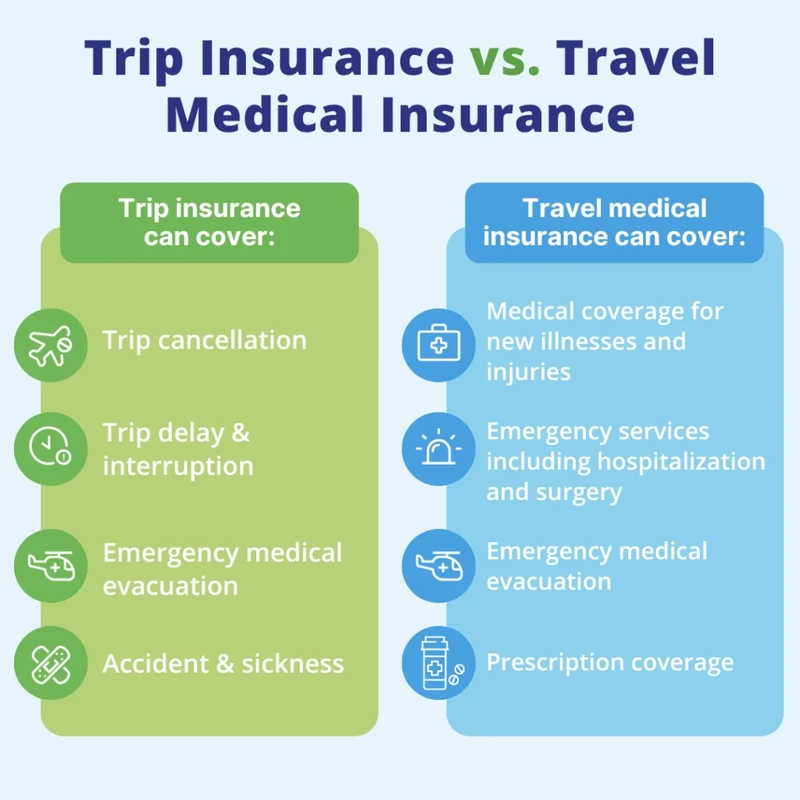
Medavie Blue Cross clarifies that routine medical or dental care is typically excluded. Travel insurance is designed for “emergency” situations—unforeseen, acute events like a broken bone or an appendectomy. If you visit a clinic for a standard prescription refill or a routine physical, expect the claim to be denied.
Geopolitical and Regulatory Restrictions
Geopolitical volatility can instantly change your coverage status. For instance, if a conflict arises in the Middle East, your insurer may immediately restrict coverage for that region. Furthermore, regulators like the Central Bank of Ireland and the Federal Financial Supervisory Authority (BAFin) in Germany enforce strict rules on what insurers can and cannot promise. Always monitor official government travel advisories, as traveling to a restricted zone can invalidate your entire policy.
FAQ
Can I claim for a flight delay of only 4 hours?
No, according to Generali, a 4-hour delay is not covered; coverage typically requires 6, 8, or 10 hours depending on your specific plan tier.
Does travel insurance cover pregnancy complications?
Some plans may cover pregnancy complications, often referencing a 30-week gestational period, but you must check your specific provider’s terms.
What is CFAR coverage?
CFAR (Cancel For Any Reason) is a specialized benefit that allows you to cancel a trip for reasons not typically covered by standard policies, often offering 50% to 75% reimbursement.
Advertisement