Advertisement
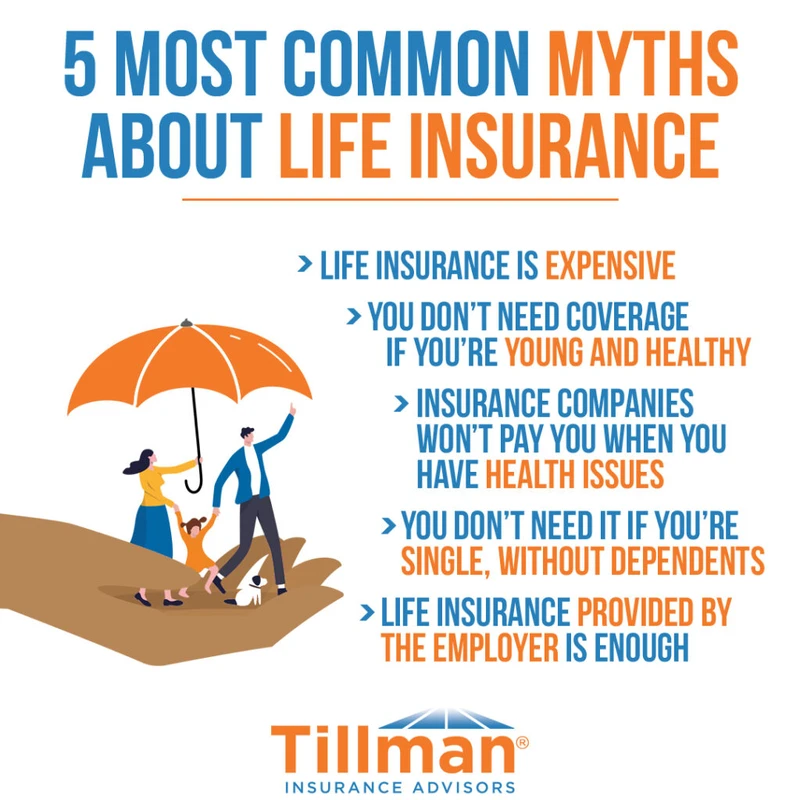
CRM FanzineFaves – Life insurance is often misunderstood as an expensive luxury for the elderly, but it is actually a critical tool for managing modern financial risks. From covering the $15,000 annual cost of childcare to protecting digital assets and ensuring inflation-adjusted coverage, debunking common myths is the first step toward true financial security.
A healthy non-smoker in their 30s can secure $500,000 in term coverage for as little as $25–$35 per month, which is often less than a standard gym membership.
Is your coverage losing value to the ‘Inflation Erosion’ myth?
The ‘Inflation Erosion’ myth is the misconception that a fixed death benefit will maintain its purchasing power over decades. In reality, a $500,000 policy today will cover significantly less in 30 years due to rising costs of living, funeral expenses, and debt.
Advertisement
If you purchase a policy today, the real-world utility of that cash may diminish as the cost of goods and services climbs. This creates a failure mode where a family receives the nominal amount promised, but that sum fails to cover the actual rising costs of a mortgage or education.
To ensure your protection evolves with your life stages, consider these specific strategies:
- Life Insurance Laddering: This technique involves using multiple budget-friendly plans with different coverage amounts and durations to provide higher protection during high-expense years.
- Policy Conversion: Moving from a term policy to a permanent product to lock in certain values.
- Regular Reviews: Adjusting coverage levels during major life milestones like a new home purchase or a child’s birth.
How ‘Laddering’ protects your future purchasing power
Implementing life insurance laddering allows a policyholder to maximize their coverage while minimizing monthly premiums. Instead of one massive, expensive policy, you might hold a $1,000,000 10-year term policy alongside a $500,000 20-year term policy. This ensures that during the years when your mortgage and childcare costs are at their peak, your death benefit is at its highest. As those debts are paid down, the coverage naturally tapers off, preventing you from overpaying for unnecessary protection in later years.
Does life insurance only cover ‘old world’ debts like mortgages?
No. Modern life insurance provides more than just mortgage protection; it can cover the complex costs of managing a digital estate, including the liquidation of crypto assets, managing digital passwords, and the administrative costs of settling a modern estate.
The misconception that life insurance is only for traditional debts like a $975 median monthly mortgage payment ignores the digital reality of 2025. When an individual passes away, their heirs often face significant administrative hurdles to access digital assets. This includes the cost of hiring professionals to manage the liquidation of cryptocurrency or the recovery of encrypted data. Without sufficient liquidity, these assets may remain permanently inaccessible to your beneficiaries.
Shortcut: To ensure digital assets are accessible, include instructions in your estate plan regarding your password management tools and cloud storage access paths.
The hidden costs of digital estate management
Managing a modern estate involves more than just settling a Will. Even a large amount of savings can quickly become drained if there’s a major life event such as a medical emergency. Families may need to navigate the administrative costs of digital identities or hire experts to manage the transition of digital intellectual property.
Why is employer-provided coverage often a dangerous trap?
Relying solely on employer life insurance is risky because it typically only provides 1–2 times your annual salary, far below the recommended 10–12x. Additionally, coverage often vanishes if you change jobs or if your employer adjusts benefits.
While an employer might offer a benefit equal to 1 or 2 times your annual salary, financial experts generally recommend a coverage level of 10–12x your annual income to ensure long-term stability. This gap can leave a massive deficit during a crisis.
Feature |
Employer-Provided Coverage |
Private Term Insurance |
Private Whole Life Insurance |
|---|---|---|---|
Portability |
Low (Lost if you leave job) |
High (Stays with you) |
High (Stays with you) |
Customization |
None (Fixed by employer) |
High (Tailored to needs) |
Very High (Includes cash value) |
Cost-per-Dollar |
Very Low (Subsidized) |
Moderate |
Higher |
Cash Value |
None |
None |
Yes |
The table above highlights the critical difference between convenience and true security. While employer coverage is easy to access, it lacks the portability required to protect a family during career transitions.
Portability vs. Convenience: The true cost of job changes
The primary failure mode of employer-provided coverage is its lack of portability. If you change jobs, relocate, or if your employer decides to adjust their benefits package, your coverage may vanish instantly. In contrast, a private policy remains under your control regardless of your employment status. As Reed Family Insurance Advisors notes, “The best time to buy life insurance is precisely when you’re young and healthy, that’s when premiums are lowest and approval is easiest.” Waiting until a job change occurs to seek private coverage can result in significantly higher premiums due to increased age or changes in health.
Can you qualify if you have pre-existing health conditions?
Yes. While health impacts premiums, you are not automatically disqualified. Guaranteed acceptance policies allow individuals to qualify without medical exams, and specific products like TruStage offer coverage for those aged 45 to 80 regardless of certain health hurdles.
A common fear is that a diagnosis of hypertension or diabetes will make insurance impossible to obtain. This is a misconception. While these conditions may lead to higher premiums through traditional medical underwriting, they do not bar you from coverage entirely. For individuals who find traditional underwriting too difficult, guaranteed acceptance policies offer a pathway to protection without the need for a medical exam.
Warning: Do not wait until a major health event occurs to seek coverage. Waiting until your 40s or until a health issue surfaces can drastically reduce your options and increase the cost of your premiums.
Understanding Guaranteed Acceptance vs. Medical Underwriting
When applying for insurance, you will typically encounter two main paths. Medical underwriting involves a review of your health history and often a physical exam to determine your risk level. If you are in good health, this path yields the lowest premiums. On the other hand, guaranteed acceptance policies—such as those offered by TruStage for individuals between 45 and 80 years old—bypass this process. While these policies may have higher costs per dollar of coverage, they ensure that you are not denied protection due to pre-existing conditions.
What are the legal failure modes of outdated beneficiaries?
A major failure mode in estate planning is failing to update beneficiaries. In many jurisdictions, a named beneficiary on a life insurance policy overrides instructions in a Will, meaning an ex-spouse could legally receive the payout despite your current intentions.
The beneficiary designation on your insurance policy is a legally binding contract that typically takes precedence over any instructions written in a Will. If you fail to update your policy after a divorce or a change in family structure, you may inadvertently leave your assets to someone you no longer intend to support.
Warning: Always review your beneficiary designations every 2–3 years or following any major life event, such as marriage, divorce, or the birth of a child.
How to use Trusts to minimize Inheritance Tax (IHT)
To avoid the complexities of direct payouts and to manage tax implications, some individuals utilize the technique of placing a policy in a trust. By naming a trust as the beneficiary rather than an individual, you can ensure the money is distributed according to very specific instructions. This can also help in minimizing Inheritance Tax (IHT) and can speed up the payment process by avoiding much of the probate period. This method provides an extra layer of control over how the funds are used to support your heirs.
Is life insurance too expensive for young families?
Life insurance is remarkably affordable for young, healthy individuals. For example, a healthy non-smoker in their 30s can secure $500,000 in coverage for roughly $25–$35 per month, which is often less than the $15,000 annual cost of daycare for one child.
While 43% of adult consumers without life insurance list “it is too expensive” as their primary reason for not having it, the actual market rates suggest otherwise. For many families, the monthly premium is a manageable fraction of their existing budget.
- Daycare Comparison: A $500,000 policy for a healthy 30-year-old can cost as little as $25 per month, whereas the average annual cost for daycare for one child is $15,000.
- Replacement Value: The annual cost of replacing a stay-at-home parent’s duties—including childcare and housekeeping—can range from $40,000 to $80,000.
- Premium Stability: Locking in a term policy while young prevents the massive premium spikes that occur later in life.
Quantifying the cost of a stay-at-home parent
When calculating how much insurance a family needs, many people mistakenly focus only on the “breadwinner.” This ignores the massive economic value of a stay-at-home parent. If that parent were to pass away, the surviving spouse would face immediate and significant costs to replace their labor, including professional childcare, housekeeping, and transportation services. These costs can easily reach $40,000 to $80,000 per year. Securing a policy
Advertisement