Advertisement
CRM FanzineFaves – AI business automation, often called ‘Automation 2.0,’ integrates machine learning and reasoning into workflows to move beyond simple rule-based tasks. Unlike traditional automation, it can process unstructured data, adapt to changing inputs, and support complex decision-making, driving significant operational efficiency and massive global market value. The use of artificial intelligence in business operations has doubled since 2017.
How do you prevent AI automation from failing in production?
To prevent failure, businesses must implement guardrails against hallucinations and model drift. Success requires a “Human-in-the-Loop” design where AI pauses for verification during high-stakes decisions, ensuring that human accountability remains central to the process.
Deployment is not a static event. While traditional automation breaks when faced with exceptions, AI introduces failure modes like hallucinations where the system generates false information. Without a verification step, a single logic loop can consume thousands of dollars in API tokens before a human notices the error.
Advertisement
Mitigating Hallucinations and Logic Loops
Implementing guardrails is not optional for enterprise-grade systems. To mitigate risks, developers should use a “Human-in-the-Loop” pattern, ensuring that any decision affecting financial records or legal status requires a manual click in the UI to proceed.
Managing Model Drift and Data Sovereignty
Model drift occurs when the underlying AI behavior changes due to updates or shifting input patterns, potentially breaking existing workflows. Furthermore, companies must navigate data privacy law complications, such as GDPR, which can halt automation if personal data is processed through unauthorized third-party APIs. Failure to manage these risks often leads to high setup costs or intense team resistance during the rollout phase.
Should you Build or Buy your AI automation architecture?
The decision to build or buy depends on complexity and scale. Buy off-the-shelf SaaS for standard tasks like scheduling or email. Build custom agentic workflows using APIs and middleware when you need to connect legacy ERP systems to LLMs or require proprietary reasoning capabilities that standard tools cannot provide.
Buying a solution like Rippling or UiPath allows for rapid deployment of standardized processes. However, a common pitfall is the “Last Mile” integration challenge, where a generic tool cannot communicate with a specific, proprietary database used by your firm. In these cases, building a custom architecture using platforms like Activepieces or Boomi becomes necessary to bridge the gap.
Approach |
Best For |
Examples |
Primary Cost Driver |
|---|---|---|---|
Buy (SaaS) |
Standardized workflows |
Rippling, UiPath |
Monthly subscription fees |
Build (Custom) |
Proprietary logic |
Activepieces, Boomi |
API tokens & Engineering |
Financial planning must account for variable costs. While SaaS subscriptions provide predictable monthly fees, custom builds can fluctuate based on API token usage. A high-volume agentic workflow making 10,000 calls per day may eventually exceed the cost of a flat-rate software license.
The ‘Last Mile’ Integration Challenge
Custom builds are often required when you need to navigate specific menu paths within legacy software to extract data. If your automation requires a sequence like Settings > Integrations > API Management to function, a standard SaaS tool might not have the necessary hooks, necessitating a custom middleware solution.
Cost of Ownership: API Tokens vs. SaaS Subscriptions
When calculating ROI, look beyond initial setup. A custom build using an LLM via API might seem cheaper than a $500/month subscription, but if the agentic workflow is poorly optimized, the token consumption can quickly exceed that amount. Monitoring usage via the developer dashboard is essential to prevent budget overruns.
What is the difference between RPA and AI-powered automation?
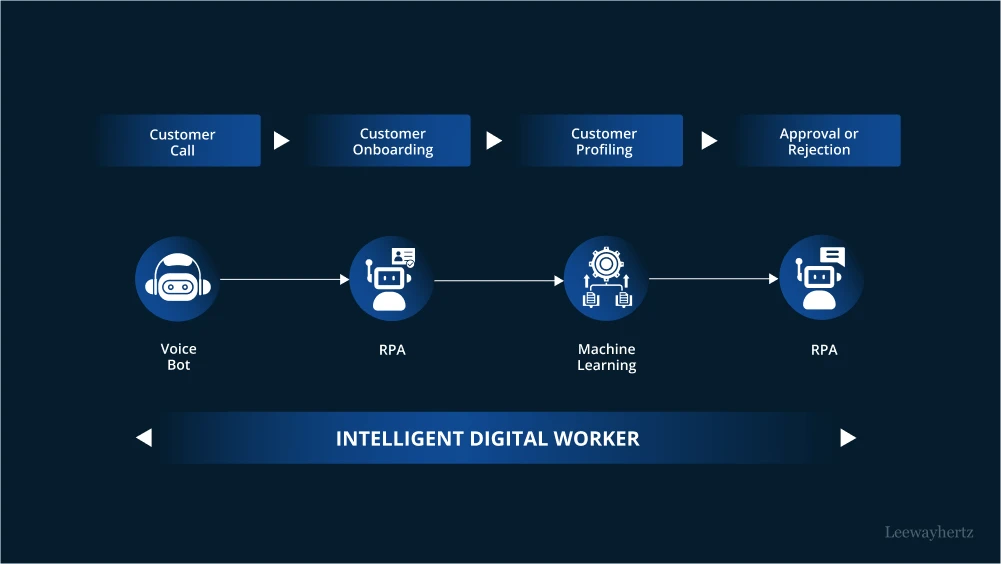
The core distinction lies in capability. RPA is the “doer” that executes repetitive, rule-based tasks, while AI is the “thinker” capable of reasoning and processing unstructured data like documents and natural language.
Consider invoice processing. An RPA bot requires data in a fixed location, such as a specific cell in an Excel sheet. If the format changes, the bot fails. Conversely, AI-powered automation can read the text and extract the total amount regardless of the layout.
The technical breakdown includes:
- Robotic Process Automation (RPA): Follows strict “if-this-then-that” rules; requires structured data; cannot learn from mistakes.
- AI Business Process Automation: Uses machine learning to interpret intent; handles unstructured data; adapts to new patterns.
Handling Unstructured Data
AI can process unstructured data where RPA fails. For example, an AI agent can analyze a 50-page legal contract to find specific clauses, whereas an RPA bot would require every single word to be pre-mapped to a database field. This capability allows for a 40% to 60% reduction in manual review time for complex documents.
From Rule-Based to Reasoning-Based Workflows
As SS&C Blue Prism notes, “RPA is the ‘doer’ while AI is the ‘thinker’.” This transition means moving from a system that simply moves data from Point A to Point B, to a system that evaluates whether the data in Point A is even valid before proceeding. This reasoning capability is what enables 95%+ accuracy rates in high-volume email processing tasks.
How much value can AI automation actually deliver?
AI automation delivers massive economic value, with Gen AI potentially adding $2.6-$4.4 trillion annually to global business. Specific organizational gains include $1.76 million in average security savings and significant reductions in manual document review time and quality control costs.
The scale of impact is evident in several key metrics across different industries:
- Global Economic Impact: Gen AI could contribute between $2.6 trillion and $4.4 trillion annually to the global economy.
- Security Efficiency: Organizations using security AI and automation extensively save an average of $1.76 million USD.
- Operational Speed: Automated parts inspections can lead to a 25-40% reduction in quality control costs.
- Market Potential: The total potential global AI market value is estimated at $4.8 trillion by 2033.
In a specific healthcare use case, a large organization saved 11,000 nursing hours and $800,000 USD by implementing AI-driven workflows. These results demonstrate that the value is not just theoretical; it is a measurable reduction in both labor hours and direct capital expenditure.
Operational Efficiency Gains
Beyond simple cost-cutting, AI drives efficiency through precision. In medical contexts, AI-generated content has reached approval rates of 99%, proving that automation can match or exceed human accuracy in highly regulated environments. This allows staff to focus on high-value tasks rather than repetitive data entry.
Strategic Resilience and Market Growth
The market for these technologies is expanding rapidly. Projections suggest that the market for AI-powered automation could grow to $19.6 billion by 2026. For companies, this represents an opportunity to scale without a linear increase in headcount, providing a level of strategic resilience that traditional businesses lack.
How do you implement an AI Augmentation strategy?
AI Augmentation uses AI to surface insights or recommendations while keeping humans accountable for final decisions. This strategy transforms employees from manual executors into strategic supervisors of automated systems.
When designing your rollout, you must answer one critical question: “Should the AI replace human judgment, or support it?” As Lakhani explains in AI for Leaders, “When we introduce AI into a process, we face a critical design question: Should the AI replace human judgment, or support it? That’s the core distinction between automation and augmentation.”
Shortcut: To quickly identify tasks for augmentation, use the “High Frequency / High Complexity” quadrant. Target tasks that happen daily but require nuanced decision-making.
The Automation vs. Augmentation Framework
Automation is best for “low-stakes, high-repetition” tasks, such as moving data between two CRM systems. Augmentation is the preferred route for “high-stakes, high-complexity” tasks, such as credit risk assessment or medical diagnosis support. This framework prevents the catastrophic failure modes associated with giving full autonomy to an unverified model.
Mapping High-Impact Workflows
To implement this, organizations should use a structured “Framework to Identify AI Automation Opportunities.” This involves two primary steps: 1. Map Your Current Workflows, and 2. Measure Time and Cost per Task. By quantifying the current manual effort, you can create a baseline to measure the true ROI of your augmentation efforts.
FAQ
What is an Agentic Workflow in business?
An agentic workflow uses AI agents that autonomously plan, decide, and execute tasks using reasoning to navigate ambiguity rather than following fixed paths. Instead of a rigid sequence, the agent evaluates the current state of a project and determines the next logical step to reach a defined goal.
Can AI automation handle unstructured data?
Yes, unlike traditional RPA, AI automation can process unstructured data such as documents, emails, and natural language through NLP and machine learning. This allows businesses to automate processes that involve reading handwritten notes, analyzing sentiment in customer feedback, or extracting data from varied invoice formats.
What are the risks of AI in business operations?
Key risks include data privacy complications (GDPR) and technical failures like hallucinations or model drift. Organizations must also manage the transition to automated workflows carefully to avoid high setup costs and team resistance.
Advertisement